Drywood Termite Evidence: What WDO Inspectors Look For
Updated July 2026
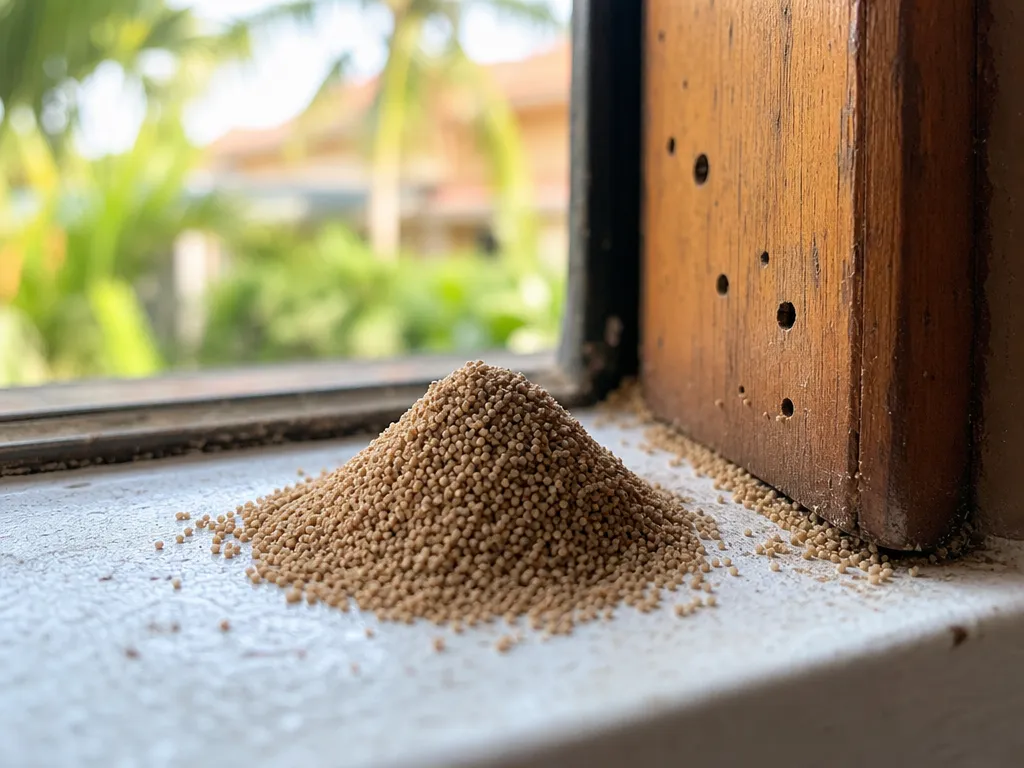
Drywood termite evidence on a Florida WDO inspection shows up as tiny six-sided fecal pellets (frass), pinhole-sized kickout holes, blistered wood surfaces, and shed swarmer wings — never the soil-packed mud tubes that mark subterranean termites. On the state inspection form, the inspector separates a live organism from visible evidence of a past infestation and from visible damage, and each of those phrasings carries different weight at closing. This guide covers what inspectors look for, where they look, how drywood signs differ from subterranean ones, and what a drywood note means for a buyer or seller.
What a drywood finding means on Form 13645: live vs evidence vs damage
A drywood entry on your report is only as serious as the category the inspector files it under, so read the wording, not just the checkbox. Florida’s wood-destroying organism inspection is recorded on FDACS Form 13645, a form required by law for real-estate transactions under Florida Statute 482.226. The statute requires the report to state the identity of any wood-destroying organisms present, any visible damage they caused, and any visible evidence of previous infestation or treatment.
In practice that splits a drywood finding into three buckets:
- Live / active infestation — the inspector saw living termites or fresh signs of activity, such as pellets actively being kicked out. This is the strongest finding.
- Visible evidence of a prior infestation — old frass, sealed exit holes, empty galleries, or discarded wings, with no live insects observed. The colony may be gone or simply not visible on the day of inspection.
- Visible damage — wood that has been eaten or weakened, whether or not live termites are present.
The report may also note previous treatment. Two limits matter for reading any of these entries. The inspection covers only what was, in the form’s own words, “visible and readily accessible” — not areas behind walls, floor coverings, insulation, or stored articles — and it is explicitly “not a structural damage report” and not a guarantee that no organisms are present. A clean report means nothing conclusive was seen where the inspector could see, not that the house is certified termite-free.
The drywood signs at a glance
Inspectors work through a short, specific set of clues, summarized here and detailed in the sections that follow.
| Sign | What it looks like | Where inspectors find it |
|---|---|---|
| Frass (termite droppings) | Six-sided, sand-like pellets about 1 mm long, cream to red to black, in loose piles | Windowsills, baseboards, attic floors, on and under furniture |
| Kickout holes | Round pinholes 1–2 mm across in the wood surface | Above frass piles, in trim, framing, and hardwood |
| Swarmer wings | Piles of equal-length translucent shed wings; dead swarmers | Near windows, in light fixtures, on floors in spring |
| Surface blisters | Rippled or bubbled veneer; a hollow sound when tapped | Trim, door and window frames, wood floors |
| Galleries | Clean, smooth chambers with no soil, seen when wood is opened | Inside framing, jambs, fascia, and furniture |
Frass: the six-sided pellet that gives drywood away
The single most reliable drywood sign is frass — the fecal pellets, often called termite droppings, that the colony ejects from inside the wood. Unlike subterranean termites, drywood termites live entirely within the wood they eat and periodically clean house, pushing waste out through small holes. According to UF/IFAS, drywood termite pellets are “hexagonal in cross section”, roughly a millimeter long, and “can be a variety of colors, including cream, red, or black.” They “often accumulate in piles or scatter circles” directly below the infested member.
To the eye, a frass pile reads like a small mound of coarse sand, sawdust, or ground pepper on a windowsill, baseboard, attic floor, or piece of furniture. Inspectors look for that fresh, cone-shaped accumulation and check whether it re-appears after being cleared — a sign the colony is still active overhead. Because each pellet’s six flattened sides are diagnostic, an experienced inspector can distinguish drywood frass from sawdust or rodent droppings with a hand lens.
Kickout holes, blisters, and swarmers
Beyond frass, inspectors hunt for the openings and surface distortions the pellets leave behind. The pellets exit through “kick-out holes,” which UF/IFAS notes are “usually 1 to 2 mm in diameter” — pinholes that are easy to miss until you find the frass below them. Inspectors also press and tap suspect wood: where galleries run just beneath the surface, the thin remaining veneer can blister, ripple, or sound hollow, since drywood colonies hollow the interior while leaving a paper-thin outer skin intact.
The fourth sign is the swarmer. When a colony matures, winged reproductives (alates) leave on mating flights and are strongly drawn to lights, so their shed wings collect on windowsills, in light fixtures, in spider webs, and on floors near windows. Piles of equal-length, translucent wings — or dead swarmers indoors — tell an inspector a reproductive drywood colony is nearby, even if the wood itself looks intact.
Where inspectors search for drywood activity
Because drywood termites need no soil or ground contact, they colonize dry, above-grade wood, so inspectors search high and dry rather than at the foundation. UF/IFAS describes Cryptotermes brevis infesting “hardwoods and softwoods that are shielded from rainfall, including common lumber used in building, as well as furniture,” in structures such as “houses, boats, [and] furniture.” Prime search zones include:
- Attic framing, rafters, trusses, and sheathing — a classic drywood harborage, checked with a flashlight for frass on the attic floor and insulation.
- Window and door frames, jambs, and sills — where frass and shed wings gather.
- Fascia, eaves, soffits, and exterior trim — dry exposed millwork.
- Baseboards, crown molding, hardwood floors, and stair stringers inside.
- Furniture and wood décor, which can arrive already infested and seed a house.
This is why a drywood inspection is a top-to-bottom job, not just a crawl under the house — the evidence is often collecting quietly in an attic or on a rarely used windowsill. Florida hosts several drywood species, and UF/IFAS notes the invasive West Indian drywood termite is “exclusively associated with structures” — which is why inspectors weight built-in framing and millwork so heavily.
Drywood vs subterranean: pellets vs mud tubes
The clearest fork in the road for any Florida inspector is pellets versus mud tubes. Subterranean termites nest in the soil and, as UF/IFAS explains, “may enter a house through small cracks or joints in the foundation or by building shelter tubes along the foundation wall” — the pencil-width mud tubes that are the equivalent of “highways connecting the underground termite population with aboveground food sources.” Drywood termites build no such tubes and carry no soil. The table below sums up how the two sets of signs diverge.
| Sign | Drywood termites | Subterranean termites |
|---|---|---|
| Fecal pellets (frass) | Yes — six-sided, sand-like, in piles | No — soil is used, not ejected pellets |
| Mud / shelter tubes | No | Yes — along foundations, piers, walls |
| Soil contact required | No — lives entirely in dry wood | Yes — nests in soil, needs moisture |
| Galleries | Clean, smooth, no soil lining | Packed with soil and mud |
| Typical location | Attic, trim, furniture, above grade | Slab edges, sill plates, crawl space |
| Swarm season (FL) | Mainly April–June, drawn to lights | Late winter to spring, afternoons after rain |
For the fungal cousin of these findings — soft, crumbling wood with no insects at all — see our guide to wood rot vs termite damage, which the same Form 13645 also reports.
Florida’s drywood swarm season
Swarm timing helps an inspector date a finding and helps you interpret loose wings on a sill. UF/IFAS reports that West Indian drywood alates “leave the colony on multiple mating flights from April to June, though flights are possible any time of the year,” and that “pellet production and alate flights can indicate the presence of Cryptotermes brevis in the structure.” Because these swarmers head for lights, evening flights in late spring are when homeowners most often notice them indoors.
Subterranean termites keep a different calendar. UF/IFAS notes that Reticulitermes flavipes dispersal runs from “early January” to “April,” during “warm, sunny, and windless early afternoons usually after rain,” with alates typically ending up “dead (dried up) near windows or in sinks and bathtubs.” So a pile of wings in January leans subterranean; a pile in May, especially near lights, leans drywood. An inspector will still confirm with the physical evidence — pellets versus tubes — before writing the species on the report.
What a drywood finding means for your transaction
A drywood note is a negotiation input, not a deal-killer. In a Florida sale, a WDO report with active drywood or drywood damage typically triggers one of a few paths: the parties agree on treatment and repairs before closing, the seller issues a credit, or the price is adjusted — who pays is a matter of contract and local custom, not a fixed rule, and lenders on VA and some other loans may require the issue cleared before funding (see when a WDO inspection is required). Read the exact wording first: “visible evidence of a previous infestation” with no live activity and no structural damage is a very different bargaining position from “live infestation” or “visible damage.”
Treatment options exist, from spot treatment to tent fumigation — but that is a separate decision made after the report, and this guide does not cover treatment methods or costs. Your job at the report stage is to understand the finding, confirm it was written by a properly licensed inspector, and decide what re-inspection or repair you want before closing. For how each section of the form is structured and how long a report stays valid, see our breakdown of the WDO report and Form 13645; to see how this differs from a general home inspection, see WDO vs home inspection.
Bottom Line
Drywood termite evidence is a recognizable set of clues — six-sided frass pellets in tidy piles, 1–2 mm kickout holes, blistered or hollow-sounding wood, and light-seeking swarmers in spring — and it is reported on Form 13645 as live activity, past evidence, or damage, each meaning something different for your sale. The absence of mud tubes and soil is what separates it from a subterranean finding. What matters most is that the inspection was thorough, top to bottom, and performed by a licensed Florida WDO inspector. Find a licensed WDO inspector near your property to get a report you can act on with confidence.
Frequently Asked Questions
What does drywood termite frass look like?
Drywood frass is a pile of tiny fecal pellets about a millimeter long, six-sided (hexagonal) in cross-section, in colors from cream to reddish-brown to black. The pellets look like coarse sand or ground pepper and collect below the infested wood.
Does drywood termite evidence make a WDO report fail?
There is no automatic pass or fail. The inspector records the finding on Form 13645 as a live organism, visible evidence of a past infestation, or visible damage. Lenders and buyers then decide how to handle it, usually through repair and re-inspection or price negotiation.
How do inspectors tell drywood from subterranean termites?
Drywood termites push six-sided pellets out of the wood and leave no soil trail. Subterranean termites build mud tubes and pack their galleries with soil. Pellets point to drywood; mud tubes point to subterranean.
When do drywood termites swarm in Florida?
The West Indian drywood termite swarms mainly from April to June, though flights are possible any time of year. Swarmers are drawn to lights, so shed wings often turn up on windowsills, in light fixtures, and on floors.
Where do drywood termites usually hide in a house?
They favor dry wood shielded from rainfall: attic framing and rafters, window and door frames, fascia and eaves, wood trim, hardwood floors, and furniture. Because they need no ground contact, they can live high in the structure.
Sources & review
Facts in this guide are checked against primary sources — leg.state.fl.us, edis.ifas.ufl.edu — linked inline where cited. Last reviewed July 2026. We are an independent directory: no inspection company pays for placement or editorial coverage.
Related Reading
Get a WDO Inspection Quote
Tell us about the property — we’ll connect you with licensed Florida WDO inspection companies for free quotes. No obligation.